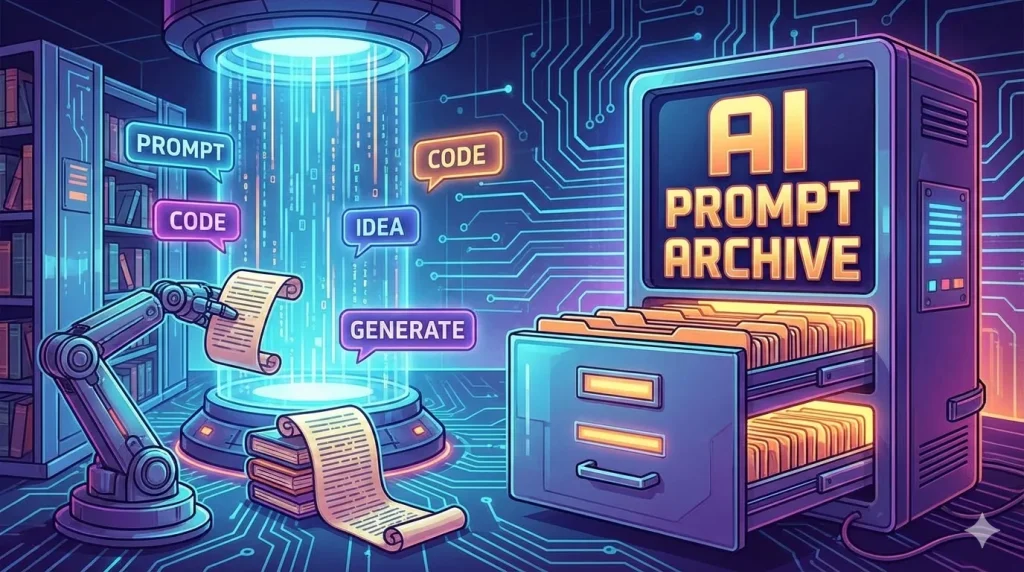
The solution isn’t just better prompting; it’s better organization. If you want to move from inconsistent guessing to predictable results, you need a centralized, organized, and searchable AI prompt archive. This isn’t optional; it’s the infrastructure of high-performing AI workflows. Ready to build your ultimate knowledge base and stop losing the magic formula? Let’s dive in.
Why You Need a Dedicated AI Prompt Archive (It’s Not Just a Spreadsheet)
Think about the intellectual property (IP) you generate every time an AI produces a flawless piece of code, marketing copy, or detailed analysis. That successful prompt—the complex structure, the perfect role assignment, the specific tone constraints—is valuable IP. Without an archive, that value vanishes the second you close the chat window.
The Hidden Cost of Prompt Hunting
We see professionals wasting precious hours trying to reverse-engineer successful outputs. They cycle through old chats, copy-paste snippets, and often end up with mediocre results because they missed one key instruction. A robust prompt database eliminates this. It transforms your workflow from reactive searching to proactive deployment. When deadlines are tight, you can’t afford to guess.
Consistency is King (The Quality Control Factor)
If you promise a client or your boss a certain level of quality, you need a mechanism to ensure repeatability. An archive documents the exact successful structure. This is crucial for team environments. If Sarah uses a prompt that gets 90% accuracy, and John uses a prompt that gets 50%, the team needs to standardize on Sarah’s method. The archive acts as your centralized quality control hub.
Learning from the Past (Iterative Improvement)
Your archive shouldn’t just store wins; it should store lessons learned. By tracking why Prompt A failed and Prompt B succeeded, you build an institutional understanding of prompt engineering. This accelerates your learning curve far beyond just reading generic tutorials online. You are learning based on *your* specific professional needs and *your* brand voice.
Building Your Prompt Database: Best Practices for Pros
Creating an effective archive requires structure, not just storage. Here’s how successful professionals organize their assets:
- Categorization by Task & Goal: Don’t just file prompts under the AI model (like ChatGPT or Gemini). Categorize them by output: ‘Blog Outlines – SEO Focus,’ ‘Python Debugging – Complex Functions,’ or ‘Competitor Analysis – Tone Mapping.’
- Mandatory Tagging and Metadata: Every entry must include metadata. This means tagging the target LLM (e.g., GPT-4, Llama 3, or specifying a high-performing gemini prompt structure), the required input context, the desired output length, and the prompt’s confidence rating (how often it yields excellent results).
- The ABCs of Prompt Annotation: Every entry needs three sections: Actual Prompt (the code), Best Output (the result), and Context & Caveats (why it worked, and when it fails).
- Version Control: Treat your prompts like code. If you make a significant improvement to a ‘V1’ prompt, save it as ‘V2’ and note the specific changes that drove the performance upgrade.
Pro Tips for Mastering Your AI Prompt Archive
Don’t Be Afraid of the Quirky Experiments
Sometimes the most successful prompts are the most unexpected ones. For instance, maybe you found that using the instruction to ‘act like a mischievous toddler who only speaks in haiku’ for a creative brainstorming session unlocked a new level of originality. (We call this the ‘nano banana prompt’ effect—it’s weirdly effective but only in specific scenarios.) Documenting these highly specific, successful edge cases is where true prompt mastery lies. An archive allows you to store the weird genius alongside the standard enterprise work.
Leverage External Resources Effectively
While building your internal knowledge base is critical, you don’t have to start from zero. Professionals often look for verified starting points or templates optimized for specific platforms. We highly recommend leveraging centralized, vetted resources like Prompts Archive to quickly source foundational prompt structures that you can then customize and save within your own system.
“The prompt archive isn’t just storage. It’s an active machine learning tool that learns from your interactions, ensuring every new prompt is built upon the success of the last.”
Making It Accessible to Your Team
A prompt archive is useless if it’s locked down. For maximum impact, the archive needs to be easily searchable by the entire team, preferably integrated into your daily communication or project management tools. This reduces prompt duplication and ensures everyone is operating at the same high baseline quality. When a new team member joins, their onboarding time for AI tools drops dramatically because the collective knowledge is already organized and waiting for them.
Future-Proofing Your AI Workflow
The speed of AI evolution is relentless. New models launch, context windows expand, and prompting techniques shift every few months. Your commitment to maintaining an AI prompt archive is the single best way to future-proof your workflow.
Why? Because even as the models change, the fundamental successful structures—the clarity of role assignment, the definition of output format, the restriction of tone—often remain relevant. By storing the high-level strategy rather than just the literal text, you maintain intellectual agility. You can quickly adapt a proven marketing prompt structure optimized for GPT-4 to work perfectly with the latest open-source model simply by tweaking the introductory syntax.
Stop wasting time reinventing the wheel. Start building your dedicated prompt archive today. It’s time to move from being an AI user to an AI workflow architect.
]]>In today’s rapidly evolving digital landscape, where artificial intelligence tools are becoming indispensable for creators, writers, developers, and artists, the ability to craft effective prompts is a superpower. But what happens when inspiration wanes, or you need a fresh perspective? This is where a Prompt Archive becomes an invaluable resource. Imagine a vast, organized library filled with meticulously crafted instructions designed to elicit the best responses from AI models. This article will delve into the world of prompt archives, exploring their purpose, features, and how they can revolutionize your creative and professional workflows. Whether you’re battling writer’s block, seeking innovative ideas for AI art, or aiming to refine your prompt engineering skills, a well-curated prompt archive offers concrete solutions and a pathway to enhanced productivity.
Exploring the World of Prompt Archives and Their Purpose
What exactly is a prompt archive, and why has it become such a critical tool in the age of artificial intelligence? A prompt archive serves as a centralized repository for prompts – the specific instructions or queries given to AI models to generate desired outputs. These archives are designed to help users discover, organize, and share effective prompts across various domains, from text generation and image creation to coding and data analysis. They act as a collective intelligence hub, democratizing access to high-quality prompting techniques and fostering innovation.
Defining what a prompt archive entails
A prompt archive is essentially a database of carefully curated prompts. These prompts can vary widely in complexity and purpose. For instance, a simple prompt might be “Write a short story about a talking cat,” while a complex one could involve multiple parameters, negative prompts, and specific stylistic instructions for an AI image generator. The core idea is to collect and categorize these prompts so that users can easily find what they need. This often includes metadata like the AI model it’s optimized for, the type of output expected, difficulty level, and user ratings. Think of it as a specialized search engine and library for AI instructions, designed to save users time and improve the quality of their AI interactions. It’s a living, breathing collection that grows with the community and the advancements in AI technology.
The growing need for organized prompt libraries
The explosion of AI tools has created an urgent demand for organized prompt libraries. As AI models become more sophisticated, the quality of their output increasingly depends on the quality of the input prompt. Crafting an effective prompt can be an art and a science, requiring experimentation, understanding of AI nuances, and often, a significant time investment. Without a structured prompt archive, users would constantly be reinventing the wheel, struggling with suboptimal results, or simply running out of ideas. Organized libraries address this by:
- Saving Time: Users can quickly find proven prompts instead of starting from scratch.
- Improving Output Quality: Access to expert-level prompts leads to better AI-generated content.
- Overcoming Creative Blocks: A diverse collection of prompts provides instant inspiration.
- Learning and Skill Development: Users can study and adapt prompts created by others to improve their own prompt engineering skills.
- Fostering Collaboration: Communities can share and refine prompts, building on each other’s work.
The sheer volume of AI applications means that a centralized, searchable prompt archive is no longer a luxury but a necessity for anyone serious about leveraging AI effectively.
Unveiling the Core Features of a Comprehensive Prompt Archive
What makes a prompt archive truly effective and user-friendly? Beyond simply storing prompts, a robust platform offers a suite of features designed to enhance discovery, organization, and community engagement. Understanding these core functionalities is key to maximizing your experience and finding the perfect prompt for any task. A well-designed prompt archive prioritizes ease of use, comprehensive categorization, and the power of collective intelligence.
Navigating the user interface and search functions
A top-tier prompt archive prioritizes an intuitive user interface (UI) and powerful search capabilities. Users should be able to quickly and easily locate prompts relevant to their needs. Key features often include:
- Keyword Search: A prominent search bar allowing users to type in specific terms like “fantasy story,” “abstract art,” or “Python code snippet.”
- Advanced Filters: Options to narrow down results by:
- AI Model: (e.g., GPT-4, Midjourney, Stable Diffusion, Claude)
- Category: (e.g., Writing, Art, Coding, Marketing, Education)
- Output Type: (e.g., Poem, Image, Blog Post, Script)
- Difficulty Level: (e.g., Beginner, Intermediate, Advanced)
- Language: (e.g., English, Spanish, French)
- Sorting Options: Ability to sort results by popularity, recency, rating, or relevance.
- User Profiles: Allowing users to save favorite prompts, track their contributions, and view their history.
An effective UI ensures that even complex searches yield manageable and relevant results, making the process of finding a prompt efficient and enjoyable.
Categorization and tagging system for prompts
The backbone of any organized prompt archive is its robust categorization and tagging system. Without proper organization, a large collection of prompts quickly becomes unwieldy and useless. This system allows prompts to be grouped and cross-referenced in meaningful ways. For example, a prompt for generating a “sci-fi short story” might be categorized under “Writing” and tagged with “science fiction,” “storytelling,” “creative writing,” and “narrative.”
Benefits of a strong categorization and tagging system include:
- Enhanced Discoverability: Users can browse broad categories or drill down into specific niches.
- Improved Relevance: Tags help users find highly specific prompts that match their exact requirements.
- Cross-Referencing: A prompt can belong to multiple categories or have numerous tags, increasing its visibility.
- Future-Proofing: A flexible system can adapt as new AI applications and prompt types emerge.
This meticulous organization transforms a simple collection into a powerful, navigable knowledge base.
Community contributions and user-submitted prompts
Many of the most valuable prompt archives thrive on community contributions. Allowing users to submit their own effective prompts creates a dynamic, ever-growing resource that benefits everyone. This crowdsourcing approach leverages the collective intelligence and diverse experiences of a global user base. Features supporting community contributions typically include:
- Prompt Submission Forms: Easy-to-use interfaces for users to upload their prompts, including fields for description, category, tags, and example outputs.
- Rating and Review Systems: Users can rate prompts, leave comments, and provide feedback, helping to highlight high-quality prompts and identify areas for improvement.
- Moderation: A system (either human or AI-assisted) to review submitted prompts for quality, relevance, and adherence to guidelines, preventing spam or low-quality content.
- Leaderboards/Recognition: Acknowledging top contributors can incentivize high-quality submissions and foster a sense of community.
This collaborative model ensures that the prompt archive remains fresh, relevant, and reflective of the latest prompting techniques and AI capabilities.
Maximizing Your Creative Output with Prompt Archive
How can you truly leverage a prompt archive to supercharge your creativity and productivity? It’s not just about finding a prompt; it’s about understanding how to effectively search, adapt, and integrate these powerful tools into your unique creative process. A well-utilized prompt archive can be the catalyst for breaking through creative barriers and generating innovative content across diverse projects.
Strategies for finding the perfect prompt
Finding the “perfect” prompt often involves more than a simple keyword search. It requires a strategic approach to exploration and refinement. Here are some effective strategies:
- Start Broad, Then Refine: Begin with general keywords related to your project (e.g., “fantasy world building,” “product description,” “abstract art”). Then, use filters (AI model, style, complexity) to narrow down the results.
- Explore Categories: Browse relevant categories even if you have a specific idea. You might discover prompts you hadn’t considered that spark new ideas.
- Study High-Rated Prompts: Pay attention to prompts with high ratings or positive reviews. These often represent proven, effective instructions.
- Look for Examples: Many prompt archives include example outputs. Analyze these to see if the prompt aligns with your desired outcome.
- Experiment with Variations: Don’t be afraid to try slightly different keywords or combine elements from multiple prompts in your search.
- Utilize “Similar Prompts” Features: Some archives offer suggestions for prompts similar to one you’re currently viewing, opening up new avenues of discovery.
By employing these strategies, you can move beyond basic searches and uncover prompts that truly resonate with your creative vision.
Adapting prompts for various creative projects
Rarely will a prompt be a perfect, out-of-the-box solution for every single project. The real power of a prompt archive lies in your ability to adapt and customize prompts to fit your specific needs. This process of adaptation is a core skill in prompt engineering.
Consider these adaptation techniques:
- Modify Keywords and Themes: Change specific nouns, adjectives, or themes within a prompt to align with your project. For example, a “sci-fi city” prompt can become a “steampunk metropolis.”
- Adjust Tone and Style: If a prompt generates a formal tone, modify it to be conversational, humorous, or academic, depending on your requirements.
- Add Constraints or Specifics: Introduce new parameters like word count, character limits, specific plot points, or color palettes.
- Combine Elements: Take a strong opening from one prompt and a detailed instruction set from another to create a hybrid that perfectly suits your goal.
- Specify AI Model Nuances: If you know your AI model responds better to certain phrasing or negative prompts, integrate those into the adapted prompt.
- Iterate and Refine: Use the adapted prompt, analyze the AI’s output, and then further refine the prompt based on the results. This iterative process is crucial for achieving optimal outcomes.
By mastering the art of adaptation, you transform a prompt archive from a static library into a dynamic toolkit for endless creative possibilities, ensuring your projects always benefit from tailored and effective AI guidance.
The Advantages of Integrating Prompt Archives into Your Workflow
Why should you bother integrating a prompt archive into your daily or weekly workflow? The benefits extend far beyond simply finding a quick solution. A dedicated prompt archive can fundamentally transform how you approach creative tasks, problem-solving, and even skill development. It’s about building efficiency, fostering continuous learning, and consistently producing higher-quality output with AI tools.
Boosting productivity and overcoming creative blocks
One of the most immediate and tangible benefits of using a prompt archive is the significant boost in productivity and its effectiveness in dismantling creative blocks. How does it achieve this?
- Instant Inspiration: When faced with a blank page or screen, a prompt archive offers a wealth of starting points. Instead of staring blankly, you can browse curated ideas, jumpstarting your creative process.
- Reduced Decision Fatigue: Choosing the right words for a prompt can be mentally taxing. An archive provides pre-vetted options, reducing the cognitive load and allowing you to focus on the creative task itself.
- Faster Iteration: With a library of proven prompts, you can quickly test different approaches and generate multiple variations of content or images, accelerating your iteration cycles.
- Consistent Quality: Access to high-quality prompts means you’re more likely to get desirable results from your AI, reducing the need for extensive post-processing or re-prompting.
- Structured Brainstorming: The categories and tags within a prompt archive can guide your brainstorming sessions, helping you explore related ideas and uncover new angles you might have missed.
By providing ready-made solutions and a structured approach to ideation, a prompt archive empowers you to maintain momentum and consistently deliver on your projects.
Learning from diverse prompting techniques
A prompt archive is not just a collection of instructions; it’s a living textbook on prompt engineering. By regularly engaging with diverse prompts, you gain invaluable insights into the nuances of interacting with AI models. This continuous learning process is crucial for anyone looking to master AI tools.
Here’s how you learn:
- Exposure to Different Styles: You’ll encounter prompts designed for various AI models, output types, and creative styles. This broadens your understanding of what’s possible.
- Understanding Structure: Analyze how effective prompts are structured – the use of clear commands, parameters, examples, and negative prompts. This helps you build your own prompts more effectively.
- Discovering Advanced Techniques: You might find prompts that utilize advanced techniques like chain-of-thought prompting, few-shot learning examples, or specific formatting instructions that you can then apply to your own work.
- Identifying Best Practices: By observing which prompts are highly rated and produce excellent results, you can discern common best practices in prompt creation.
- Adapting and Experimenting: The process of adapting existing prompts forces you to think critically about prompt construction and how small changes can lead to vastly different AI outputs.
Integrating a prompt archive into your workflow transforms you from a passive user into an active learner, continuously honing your skills and deepening your understanding of AI capabilities.
Contributing to and Engaging with the Prompt Archive Community
A prompt archive is often more than just a database; it’s a community. Engaging with this community, both by contributing your own insights and interacting with others, enriches the resource for everyone. Sharing your knowledge not only helps others but also refines your own understanding and establishes you as a valuable member of the prompt engineering ecosystem.
How to submit your own effective prompts
Contributing your own prompts to a prompt archive is a fantastic way to give back to the community and solidify your understanding of effective prompt engineering. While specific submission processes may vary between platforms, general guidelines often include:
- Craft a Clear and Concise Prompt: Ensure your prompt is easy to understand and directly communicates the desired outcome. Avoid ambiguity.
- Provide Context and Description: Explain the purpose of the prompt, what kind of output it’s designed for, and any specific AI model it works best with.
- Include Example Outputs: Showing what the prompt can achieve is incredibly helpful. This validates its effectiveness and gives other users a benchmark.
- Categorize and Tag Appropriately: Select the most relevant categories and add descriptive tags to ensure your prompt is easily discoverable by others.
- Specify Parameters: If your prompt relies on specific settings (e.g., image aspect ratios, temperature settings for text models), include these details.
- Review and Test: Before submitting, run your prompt multiple times to ensure it consistently produces good results and is free of errors.
By following these steps, you can ensure your contributions are valuable and well-received, enhancing the overall quality of the prompt archive.
Best practices for prompt creation and sharing
Beyond simply submitting a prompt, there are best practices that elevate your contributions and foster a thriving community around the prompt archive. Adhering to these principles ensures your shared prompts are not just present, but truly impactful.
- Be Specific, Not Vague: Instead of “write a story,” try “write a 500-word dystopian short story about a lone survivor in a futuristic city, focusing on themes of hope and resilience.”
- Use Clear Language: Avoid jargon where possible, or explain it. Ensure your instructions are unambiguous.
- Iterate and Optimize: Don’t share the first version of a prompt. Refine it through testing until it consistently yields high-quality results.
- Add Negative Prompts (for image AI): If applicable, include what you don’t want to see in the output (e.g., “ugly, deformed, blurry”).
- Credit Sources (if applicable): If you adapted a prompt or were inspired by another’s work, acknowledge it.
- Engage with Feedback: If users comment on your prompt, respond constructively. Use feedback to improve your future contributions.
- Keep it Updated: As AI models evolve, older prompts might become less effective. Consider revisiting and updating your shared prompts periodically.
By embracing these best practices, you become a valuable contributor, helping to build a rich, reliable, and dynamic prompt archive that benefits the entire AI community.
Looking Ahead: The Evolution of Prompt Archives
The landscape of AI is constantly shifting, and prompt archives are evolving alongside it. What can we expect from these invaluable resources in the coming years? The future promises even more sophisticated features, deeper integration with AI tools, and a continued emphasis on community-driven innovation. The role of a prompt archive will only grow in importance as AI becomes more pervasive.
Potential new features and functionalities
As AI technology advances, so too will the capabilities of prompt archives. We can anticipate several exciting new features:
- AI-Powered Prompt Recommendations: Imagine an archive that learns your preferences and suggests prompts tailored to your current project or past usage.
- Version Control for Prompts: Similar to code repositories, users could track changes to prompts, revert to previous versions, and see how modifications impact AI output.
- Collaborative Prompt Editing: Teams could work together on complex prompts, with real-time editing and commenting features.
- Integration with AI Tools: Direct “send to AI” buttons, allowing users to instantly load a prompt into their preferred AI model without copy-pasting.
- Performance Analytics: Data on how often a prompt is used, its success rate, and the types of outputs it generates, helping users choose the most effective options.
- Multimodal Prompt Support: Archives that seamlessly handle prompts for text, image, audio, and even video generation, with specialized tools for each.
These advancements will make prompt archives even more powerful and indispensable for creators and developers alike.
The future role of AI in prompt generation
It’s a fascinating paradox: AI models are used to generate content, and now AI is increasingly being used to generate the prompts themselves. This symbiotic relationship is set to deepen significantly. The future role of AI in prompt generation includes:
- Prompt Augmentation: AI could take a basic user idea and expand it into a detailed, optimized prompt, adding parameters, negative prompts, and stylistic instructions.
- Dynamic Prompting: AI could generate prompts that adapt in real-time based on previous AI outputs, creating a more interactive and iterative creative process.
- Prompt Optimization: AI could analyze a user’s desired outcome and suggest the most effective phrasing or structure for a prompt to achieve it, learning from vast datasets of successful prompts.
- Personalized Prompt Creation: Based on a user’s past projects and preferences, AI could generate entirely new, bespoke prompts designed to spark unique ideas.
- Cross-Model Prompt Translation: AI could translate a prompt optimized for one AI model into an equivalent, effective prompt for a different model, bridging compatibility gaps.
This integration of AI into the prompt generation process will further democratize access to high-quality AI outputs, making sophisticated prompt engineering accessible to everyone, regardless of their technical expertise. The prompt archive will serve as a crucial hub for these AI-generated prompts, ensuring they are organized, discoverable, and continuously improved.
Key Takeaways & Next Steps
The journey through the world of the Prompt Archive reveals its profound importance in our AI-driven era. We’ve seen how these organized libraries serve as indispensable tools for boosting creativity, overcoming blocks, and refining our interactions with artificial intelligence. From their robust search functions and community contributions to their potential for future AI-powered enhancements, prompt archives are central to effective prompt engineering.
Key Takeaways:
- A Prompt Archive is a vital repository for effective AI instructions, saving time and improving output quality.
- Strong categorization, tagging, and search features are crucial for efficient prompt discovery.
- Adapting and customizing prompts is key to maximizing creative output across diverse projects.
- Integrating a prompt archive into your workflow boosts productivity and fosters continuous learning of prompting techniques.
- Community engagement, through sharing and feedback, enriches the archive for everyone.
- The future of prompt archives includes AI-powered recommendations and even AI-generated prompts, further enhancing their utility.
Next Steps:
- Explore a Prompt Archive: If you haven’t already, spend time navigating an existing prompt archive to understand its structure and offerings.
- Experiment with Prompts: Choose a few prompts from different categories and try them out with your preferred AI tools.
- Practice Adaptation: Take an existing prompt and try to modify it to suit a slightly different creative goal.
- Consider Contributing: Once you’ve crafted a particularly effective prompt, consider sharing it with the community to help others.
- Stay Updated: Keep an eye on new features and developments in prompt archives and AI prompting techniques to continuously refine your skills.
Embracing the power of a prompt archive is not just about finding answers; it’s about unlocking new possibilities and becoming a more effective, innovative creator in the age of AI.
Building Your Prompt Archive: Practical Steps for Implementation
Creating an effective prompt archive doesn’t require complex software; it demands a systematic approach. Start by choosing a suitable platform, whether it’s a simple spreadsheet, a dedicated note-taking app like Notion or Obsidian, or a specialized prompt management tool. The key is consistency. For each prompt, document essential metadata: the date it was created or last used, the specific AI model it was designed for (e.g., GPT-3.5, GPT-4, Midjourney), its intended purpose, and the desired output format. Crucially, include the prompt itself, the AI’s response, and any notes on its effectiveness or areas for improvement. Categorize your prompts using tags (e.g., “brainstorming,” “code generation,” “summarization,” “image generation”) and folders to ensure easy retrieval. Implement a version control system, even if it’s just adding a “v1,” “v2” to your prompt names, to track iterations and improvements. This structured approach transforms a mere collection of prompts into a powerful, searchable knowledge base.
Key Takeaways & Next Steps
- Choose Your Tool: Select a platform that fits your workflow (spreadsheet, Notion, dedicated app).
- Document Thoroughly: Record metadata like date, AI model, purpose, and actual output.
- Categorize & Tag: Use a consistent system for easy search and retrieval.
- Version Control: Track prompt iterations to understand evolution and effectiveness.
- Action: Start archiving your next five prompts with detailed metadata.
Advanced Strategies for Prompt Engineering and Optimization
Once your prompt archive is established, its true power emerges through strategic utilization. Move beyond simple storage by actively analyzing your archived prompts. Conduct informal A/B testing by comparing variations of a prompt and their respective AI outputs, noting which structures or phrasing consistently yield superior results. This allows you to identify patterns and best practices tailored to your specific needs and the AI models you use. Leverage your archive to train new team members or refine your own prompt engineering skills, using successful examples as templates and failed attempts as learning opportunities. For teams, a collaborative prompt archive becomes an invaluable shared resource, fostering consistency and efficiency across projects. Regularly review your highest-performing prompts to distill core principles that can be applied to new challenges, transforming your archive from a static repository into a dynamic engine for continuous improvement and innovation in AI interaction.
Key Takeaways & Next Steps
- Analyze & Compare: Actively review prompts and outputs to identify successful patterns.
- A/B Test: Experiment with prompt variations to optimize performance.
- Collaborate: Share and build upon successful prompts within a team environment.
- Extract Principles: Distill core prompt engineering best practices from your archive.
- Action: Select 3-5 high-performing prompts and analyze what makes them effective.
In the rapidly evolving world of artificial intelligence, the ability to communicate effectively with AI models is no longer a niche skill but a fundamental necessity. This is where prompt engineering comes into play. It’s the specialized discipline of designing and refining inputs, or “prompts,” to guide AI models, particularly large language models (LLMs), toward generating desired outputs. Whether you’re a developer, a content creator, or simply curious about AI, understanding prompt engineering is your key to unlocking the full potential of these powerful tools. It transforms vague queries into precise instructions, ensuring that the AI understands your intent and delivers accurate, relevant, and high-quality responses. Without effective prompting, even the most advanced AI can fall short of expectations, producing generic or unhelpful content. Let’s dive into how you can master this essential skill.
Understanding the Fundamentals of Prompt Engineering
What exactly is prompt engineering, and why is it so crucial for interacting with artificial intelligence? Prompt engineering is essentially the art and science of crafting inputs (prompts) that elicit specific and desired responses from AI models. Think of it as learning the language of AI. Instead of just asking a question, you’re providing context, constraints, and examples to guide the AI’s thought process. Its primary purpose is to optimize the interaction between humans and AI, ensuring that the AI’s output aligns perfectly with the user’s intent. This discipline has become indispensable as AI models grow more complex and capable, requiring more nuanced guidance to perform specialized tasks.
Defining Prompt Engineering and Its Purpose
At its core, prompt engineering involves strategically designing the text you feed into an AI model. This isn’t just about asking a question; it’s about providing a comprehensive set of instructions, context, and examples to steer the AI towards a particular outcome. The purpose is multifaceted:
- Maximize Relevance: Ensure the AI’s response directly addresses the user’s need.
- Improve Accuracy: Reduce hallucinations or incorrect information by providing clear guidelines.
- Enhance Creativity: Guide the AI to generate innovative and unique content within specified parameters.
- Boost Efficiency: Get the desired output in fewer attempts, saving time and computational resources.
- Control Tone and Style: Dictate the voice, style, and format of the AI’s output.
Ultimately, prompt engineering aims to bridge the communication gap between human intent and AI understanding, making AI tools more effective and user-friendly.
The Importance of Effective Prompting for AI
Effective prompting is the bedrock of successful AI interaction. Without it, even the most sophisticated AI models can produce outputs that are irrelevant, inaccurate, or simply unhelpful. Consider a chef given vague instructions – the result might be edible, but it won’t be the specific dish you craved. Similarly, AI models, while powerful, lack true understanding or common sense. They operate based on patterns and probabilities learned from vast datasets. Effective prompts provide the necessary structure and context, acting as a detailed recipe for the AI. This guidance helps the AI navigate its immense knowledge base to pinpoint the most relevant information and present it in the desired format. It’s the difference between a generic search result and a tailored, actionable insight.
Core Concepts and Terminology in Prompting
To become proficient in prompt engineering, it’s helpful to understand some key terms:
- Prompt: The input text or query given to an AI model.
- Large Language Model (LLM): The AI model itself, such as GPT-3, GPT-4, or LLaMA, designed to understand and generate human-like text.
- Token: The basic unit of text that an LLM processes. It can be a word, part of a word, or even a punctuation mark.
- Context Window: The maximum number of tokens an LLM can consider at once when generating a response. Longer prompts consume more of this window.
- Temperature: A parameter that controls the randomness or creativity of the AI’s output. Higher temperatures lead to more diverse, sometimes unpredictable, responses.
- Top-P (Nucleus Sampling): Another parameter for controlling randomness, focusing on selecting from a smaller, more probable set of tokens.
- Few-Shot Prompting: Providing a few examples within the prompt to teach the AI a specific task or pattern.
- Zero-Shot Prompting: Asking the AI to perform a task without any prior examples, relying solely on its pre-trained knowledge.
- Chain-of-Thought (CoT) Prompting: Guiding the AI to show its reasoning steps before providing a final answer.
Understanding these concepts empowers you to fine-tune your prompts for optimal results.
Essential Techniques for Crafting Effective Prompts
How can you ensure your prompts consistently yield the best possible results from AI models? Crafting effective prompts is an iterative process that combines clear communication with strategic design. It’s not just about what you ask, but how you ask it. By focusing on clarity, providing ample context, and being willing to refine your approach, you can significantly enhance the quality and relevance of AI-generated content. These techniques form the backbone of successful prompt engineering, transforming vague ideas into precise instructions that AI can readily follow.
Achieving Clarity and Specificity in Your Prompts
The golden rule of prompt engineering is clarity and specificity. Ambiguous prompts lead to ambiguous results. The AI cannot guess your intent; it can only process the information you provide. To achieve clarity:
- Be Direct: State your request plainly and avoid jargon unless it’s necessary and well-defined.
- Use Action Verbs: Clearly instruct the AI on what to do (e.g., “Summarize,” “Generate,” “Explain,” “Compare”).
- Define Terms: If using specialized terms, briefly explain them or provide examples.
- Specify Format: Tell the AI how you want the output structured (e.g., “as a bulleted list,” “in a paragraph,” “as a table”).
- Set Constraints: Include length requirements (e.g., “under 200 words,” “a 3-sentence summary”) or other limitations.
For example, instead of “Write about dogs,” try “Generate a 150-word descriptive paragraph about the loyalty and companionship of golden retrievers, written in a warm, friendly tone.” This level of detail leaves little room for misinterpretation.
Providing Contextual Information for Better Responses
AI models thrive on context. The more background information you provide, the better equipped the AI will be to generate a relevant and accurate response. Think of yourself explaining a complex situation to someone who knows nothing about it – you’d start with the basics. Similarly, for AI:
- Background Information: Briefly explain the topic or situation.
- Target Audience: Specify who the output is for (e.g., “for a general audience,” “for marketing professionals”).
- Purpose: Explain why you need the information (e.g., “to inform a blog post,” “to draft an email”).
- Key Details: Include any specific facts, dates, names, or concepts that must be incorporated.
- Examples (if applicable): If you have a desired style or format, provide an example.
For instance, if you want an email, provide the sender, recipient, purpose, key points to include, and desired tone. This rich context helps the AI understand the nuances of your request and produce a more sophisticated output.
Iterative Refinement: Testing and Improving Prompts
Prompt engineering is rarely a one-shot process. It’s an iterative cycle of testing, evaluating, and refining. Your first prompt might not yield the perfect result, and that’s perfectly normal. The key is to learn from each interaction. Here’s how to approach iterative refinement:
- Initial Prompt: Start with your best attempt based on clarity and context.
- Evaluate Output: Carefully review the AI’s response. Does it meet your requirements? Is anything missing or incorrect?
- Identify Gaps: Pinpoint what went wrong. Was the prompt too vague? Did it lack crucial information? Was the tone off?
- Adjust and Refine: Modify your prompt based on your evaluation. Add more specificity, provide additional context, or change the instructions.
- Test Again: Submit the revised prompt and compare the new output to the previous one.
This continuous feedback loop allows you to progressively hone your prompt engineering skills and achieve increasingly precise and satisfactory results. Don’t be afraid to experiment with different phrasing or parameters.
Advanced Strategies for Mastering Prompt Engineering
Ready to elevate your prompt engineering skills beyond the basics? Advanced strategies allow you to tackle more complex tasks, guide AI through intricate reasoning processes, and even imbue it with specific personalities. These techniques move beyond simple instructions, leveraging the AI’s underlying capabilities to achieve highly nuanced and sophisticated outputs. By understanding and applying these methods, you can unlock new dimensions of AI interaction, making your prompts incredibly powerful and your AI responses remarkably intelligent. Mastering these strategies is a significant step towards becoming a true AI whisperer.
Leveraging Few-Shot Prompting for Specific Tasks
Few-shot prompting is a powerful technique where you provide the AI with a small number of examples (typically 1-5) of the desired input-output pair directly within your prompt. This teaches the AI the specific pattern or task you want it to perform, even if it’s a highly specialized or niche request. It’s particularly effective when:
- The task is unique or not commonly found in the AI’s training data.
- You need the AI to follow a very specific format or style.
- You want to ensure consistency in the AI’s responses.
Example: “Translate the following English phrases into a whimsical, poetic style: English: ‘The sun is shining.’ Poetic: ‘The golden orb doth grace the sky.’ English: ‘I am happy.’ Poetic: ‘My spirit dances with delight.’ English: ‘The cat is sleeping.’ Poetic: ‘The feline dreams in slumber deep.'”
By providing these examples, the AI learns the desired transformation and can apply it to new inputs more effectively than with a zero-shot prompt.
Implementing Chain-of-Thought Prompting for Reasoning
For tasks requiring logical reasoning, problem-solving, or multi-step processes, Chain-of-Thought (CoT) prompting is invaluable. This technique encourages the AI to “think step-by-step” before arriving at a final answer. You achieve this by explicitly instructing the AI to show its reasoning process. This not only improves the accuracy of complex answers but also makes the AI’s decision-making transparent, allowing you to debug or understand where it might have gone wrong.
How to use CoT: Simply add phrases like “Let’s think step by step,” “Explain your reasoning,” or “Walk me through your process” to your prompt.
Example: “A baker has 24 cupcakes. He sells half of them, then bakes 10 more. How many cupcakes does he have now? Let’s think step by step.”
The AI would then likely respond: “1. He starts with 24 cupcakes. 2. He sells half: 24 / 2 = 12 cupcakes sold. 3. Remaining cupcakes: 24 – 12 = 12 cupcakes. 4. He bakes 10 more: 12 + 10 = 22 cupcakes. Final Answer: The baker has 22 cupcakes.”
This method significantly boosts the AI’s ability to handle arithmetic, logical puzzles, and multi-stage instructions.
Utilizing Role-Playing and Persona-Based Prompting
Role-playing and persona-based prompting involve assigning a specific role or persona to the AI. This helps the AI adopt a particular tone, style, and knowledge base, making its responses more tailored and authentic. It’s incredibly useful for generating content that needs to resonate with a specific audience or be delivered from a particular perspective.
How to use: Start your prompt by defining the AI’s role.
Examples:
- “You are a seasoned marketing strategist. Draft a compelling social media post announcing our new product, focusing on its benefits for small businesses.”
- “Act as a friendly, knowledgeable travel guide for Paris. Describe three must-visit hidden gems for a first-time visitor.”
- “Assume the persona of a critical literary critic. Write a short review of a classic novel, highlighting its flaws and strengths.”
By giving the AI a clear identity, you guide its output to be more consistent and appropriate for the intended context.
Practical Applications and Tools in Prompt Engineering
Where can prompt engineering be applied, and what resources are available to help you master it? The practical applications of prompt engineering are vast and span across numerous industries, demonstrating its versatility and power. From content creation to data analysis, effective prompting is revolutionizing how we interact with AI. Furthermore, a growing ecosystem of tools and frameworks is emerging to support prompt engineers, making the process more efficient and accessible. Understanding these real-world use cases and available resources is crucial for anyone looking to leverage AI effectively in their professional or personal life.
Real-World Use Cases Across Various Industries
Prompt engineering is not just a theoretical concept; it’s a practical skill with tangible benefits across diverse sectors:
- Content Creation: Generating blog posts, articles, marketing copy, social media updates, and even creative writing. Prompt engineers can guide AI to match specific brand voices and content styles.
- Software Development: Assisting with code generation, debugging, explaining complex code snippets, and even writing documentation. Developers use prompts to specify programming languages, functions, and desired outputs.
- Customer Service: Developing sophisticated chatbots that can handle complex queries, provide personalized support, and escalate issues appropriately, all guided by carefully engineered prompts.
- Education: Creating personalized learning materials, generating quizzes, explaining difficult concepts, and providing feedback to students. Prompts can tailor content to different learning styles and levels.
- Research and Analysis: Summarizing lengthy documents, extracting key information from data, generating hypotheses, and assisting with literature reviews. Precise prompts ensure accurate data extraction and synthesis.
- Healthcare: Aiding in medical transcription, summarizing patient records, and generating preliminary diagnostic information (under human supervision).
These examples highlight how prompt engineering empowers professionals to integrate AI seamlessly into their workflows, boosting productivity and innovation.
Exploring Prompt Templates and Frameworks
To streamline the prompt engineering process, many developers and platforms offer prompt templates and frameworks. These are pre-designed structures or guidelines that help users craft effective prompts for common tasks. They often include placeholders for specific information, ensuring that all necessary context is provided.
Benefits of using templates:
- Consistency: Ensures all prompts for a similar task follow a uniform structure.
- Efficiency: Reduces the time and effort required to craft prompts from scratch.
- Best Practices: Incorporates proven prompt engineering techniques.
- Reduced Errors: Minimizes the chances of omitting crucial information.
Many AI platforms (like OpenAI’s Playground, Google’s Bard, Anthropic’s Claude) offer built-in examples and templates. Additionally, communities and open-source projects share effective prompt structures for various applications. Learning to adapt and create your own templates is a valuable skill for any prompt engineer.
Evaluating AI Model Responses Based on Prompts
A critical part of prompt engineering is the ability to effectively evaluate the AI’s responses. This isn’t just about checking for correctness; it’s about assessing how well the response aligns with your original intent and the specific parameters set in your prompt. Here are key criteria for evaluation:
- Relevance: Does the response directly answer the prompt’s question or fulfill its request?
- Accuracy: Is the information provided factually correct? (Requires external verification for critical data).
- Completeness: Does the response include all the necessary details and address all parts of the prompt?
- Clarity and Coherence: Is the language clear, easy to understand, and logically structured?
- Tone and Style: Does the response match the desired tone, voice, and style specified in the prompt?
- Conciseness: Is the response free of unnecessary verbosity or repetition, adhering to length constraints?
- Format: Does the output follow the specified format (e.g., bullet points, paragraph, table)?
By systematically evaluating responses, you gain insights into how to refine your prompts and improve future interactions with the AI.
Common Challenges and Best Practices in Prompt Engineering
What obstacles might you encounter in prompt engineering, and how can you overcome them to achieve consistent success? While prompt engineering offers immense power, it’s not without its challenges. Issues like ambiguity, misinterpretation, and ethical considerations can hinder effective AI interaction. However, by adhering to established best practices and staying informed about the evolving landscape of AI, you can navigate these hurdles successfully. This section will equip you with the knowledge to anticipate common problems and implement strategies for responsible and effective prompt engineering, ensuring you get the most out of your AI tools.
Overcoming Ambiguity and Misinterpretation Issues
One of the most frequent challenges in prompt engineering is dealing with ambiguity and the AI’s potential to misinterpret your intent. AI models, despite their sophistication, lack true human understanding and common sense. They rely solely on the patterns in their training data. This can lead to:
- Generic Responses: If your prompt is too broad, the AI might provide a general answer that lacks specific value.
- Misinterpretations: The AI might latch onto a keyword and miss the overall context, leading to an irrelevant response.
- Hallucinations: The AI might confidently generate false information if it doesn’t have enough context or if the prompt is too open-ended.
To overcome these issues, always strive for maximum clarity and specificity. Use precise language, define any potentially ambiguous terms, and provide ample context. If the AI misinterprets, analyze its output to understand where the misunderstanding occurred and adjust your prompt accordingly. Sometimes, breaking down a complex request into smaller, sequential prompts can also help.
Ethical Considerations and Responsible Prompting
As AI becomes more integrated into our lives, the ethical implications of prompt engineering become increasingly important. Responsible prompting involves being mindful of the potential for AI to generate harmful, biased, or misleading content. Key ethical considerations include:
- Bias: AI models can reflect biases present in their training data. Prompts should be designed to mitigate, not amplify, these biases. Avoid prompts that encourage stereotypes or discrimination.
- Misinformation: Be cautious about prompts that could lead the AI to generate false or misleading information, especially on sensitive topics. Always verify critical AI-generated content.
- Harmful Content: Never prompt the AI to generate hate speech, violence, illegal activities, or sexually explicit material. Most AI models have safeguards, but responsible user behavior is crucial.
- Privacy: Avoid including sensitive personal or confidential information in your prompts, as AI models may retain and process this data.
- Transparency: Be transparent when using AI-generated content, especially in professional or public-facing contexts.
Adhering to these ethical guidelines ensures that AI is used constructively and responsibly, benefiting society rather than causing harm.
Future Trends and the Evolution of Prompt Engineering
Prompt engineering is a dynamic field that is constantly evolving alongside AI technology. Several trends are shaping its future:
- Automated Prompt Optimization: Tools and techniques are emerging that can automatically generate and refine prompts, reducing the manual effort required.
- Multimodal Prompting: As AI models become capable of processing various data types (text, images, audio), prompt engineering will extend to combining these modalities for richer interactions.
- Agentic AI: Future AI systems may act as autonomous agents, capable of breaking down complex tasks into sub-prompts and executing them sequentially, requiring prompt engineers to focus on higher-level goals.
- Domain-Specific Prompting: The development of highly specialized AI models will lead to prompt engineering techniques tailored for specific industries like medicine, law, or engineering.
- User-Friendly Interfaces: As prompt engineering becomes more mainstream, interfaces will likely become more intuitive, abstracting away some of the complexity for general users while still offering advanced controls for experts.
Staying abreast of these trends will be crucial for anyone looking to remain at the forefront of AI interaction and leverage the full potential of future AI systems.
Key Takeaways & Next Steps
Mastering prompt engineering is an indispensable skill in today’s AI-driven world. We’ve explored its fundamentals, essential techniques, advanced strategies, and practical applications. From understanding core concepts like clarity and context to leveraging sophisticated methods like Chain-of-Thought and persona-based prompting, you now have a comprehensive toolkit to interact more effectively with AI. Remember the importance of iterative refinement, ethical considerations, and staying informed about future trends.
Your Next Steps:
- Practice Regularly: The best way to improve is by actively experimenting with different prompts and AI models.
- Analyze Outputs: Critically evaluate every AI response to understand what worked and what didn’t.
- Experiment with Parameters: Play with temperature, top-P, and other settings to see how they affect creativity and coherence.
- Stay Informed: Follow AI news, research papers, and community discussions to keep up with new techniques and model capabilities.
- Share and Learn: Engage with other prompt engineers, share your findings, and learn from their experiences.
By continuously honing your prompt engineering skills, you’ll not only unlock the true potential of AI but also position yourself as a valuable asset in any field touched by artificial intelligence.
Advanced Prompt Engineering Techniques for Enhanced AI Interaction
Beyond the foundational principles, advanced prompt engineering techniques empower users to extract even more nuanced and precise outputs from AI models. One such technique is Chain-of-Thought (CoT) prompting, which encourages the model to articulate its reasoning process step-by-step before arriving at a final answer. This not only improves accuracy, especially for complex problems, but also makes the AI’s decision-making more transparent. Another powerful method is Few-Shot Prompting, where you provide a few examples of input-output pairs within your prompt to guide the model towards the desired format or style, significantly reducing the need for extensive fine-tuning. Techniques like Role-Playing, where you instruct the AI to adopt a specific persona (e.g., “Act as a senior marketing strategist”), can dramatically alter the tone, depth, and perspective of its responses. Furthermore, iterative refinement, involving multiple rounds of prompting and feedback, allows for continuous optimization of the output, gradually shaping it to meet highly specific requirements. Mastering these advanced strategies transforms AI from a simple answer generator into a sophisticated collaborative partner.
Key Takeaways & Next Steps
- Chain-of-Thought Prompting: Encourage step-by-step reasoning for complex tasks.
- Few-Shot Prompting: Provide examples to guide the AI’s output format and style.
- Role-Playing: Assign specific personas to the AI for tailored responses.
- Iterative Refinement: Continuously improve outputs through multiple feedback loops.
- Next Steps: Experiment with these techniques on your current AI projects to observe their impact on output quality and relevance.
Ethical Considerations and Responsible Prompt Engineering
As prompt engineering becomes more sophisticated, so too does the responsibility of its practitioners. Ethical considerations are paramount to ensure AI is used beneficially and equitably. A critical aspect is bias mitigation; poorly constructed prompts can inadvertently amplify existing biases present in the training data, leading to unfair, discriminatory, or inaccurate outputs. Prompt engineers must actively design prompts that promote fairness, inclusivity, and neutrality. Furthermore, understanding the potential for misuse is crucial. AI can be prompted to generate harmful content, misinformation, or engage in deceptive practices. Responsible prompt engineering involves implementing safeguards, adhering to ethical guidelines, and understanding the societal impact of AI-generated content. Transparency about AI’s capabilities and limitations, along with clear attribution when AI is used, fosters trust. Ultimately, ethical prompt engineering is about consciously steering AI towards positive outcomes, preventing harm, and upholding principles of fairness, accountability, and transparency in all AI interactions.
Key Takeaways & Next Steps
- Bias Mitigation: Actively design prompts to reduce and prevent biased outputs.
- Preventing Misuse: Be aware of and guard against the generation of harmful or deceptive content.
- Transparency: Be clear about AI’s role and limitations in content creation.
- Accountability: Take responsibility for the outputs generated through your prompts.
- Next Steps: Review your prompting practices for potential biases and consider the broader societal implications of your AI applications.
The Future Landscape of Prompt Engineering and AI Collaboration
The field of prompt engineering is rapidly evolving, promising an exciting future where human-AI collaboration reaches unprecedented levels. We are already seeing the emergence of automated prompt generation tools that can suggest or even create optimized prompts based on user intent, significantly lowering the barrier to entry for complex AI tasks. Furthermore, prompt engineering is likely to integrate more deeply with other AI disciplines, such as reinforcement learning, where AI models could learn to refine their own prompts through trial and error to achieve desired outcomes. The concept of “prompt marketplaces” or shared prompt libraries could also emerge, allowing users to leverage and contribute to a collective intelligence of effective prompts. As AI models become more multimodal, prompt engineering will extend beyond text to include images, audio, and video, requiring new paradigms for interaction. Ultimately, the future will see prompt engineering become an indispensable skill, not just for AI specialists, but for professionals across all sectors, enabling them to harness increasingly powerful AI systems as intelligent co-pilots in their daily work and innovation efforts.
Key Takeaways & Next Steps
- Automation: Expect more tools for automated prompt generation and optimization.
- Multimodality: Prompting will expand to include various data types beyond text.
- Integration: Deeper integration with other AI fields for self-improving prompts.
- Specialization: Prompt engineering will become a specialized and highly valued skill.
- Next Steps: Stay updated on emerging tools and techniques in prompt engineering and explore how multimodal AI might impact your field.
In today’s fast-paced digital world, artificial intelligence tools like ChatGPT have become indispensable for a myriad of tasks, from content creation to complex problem-solving. However, the true power of these AI models isn’t unlocked by simply typing a question; it’s revealed through the skill of prompting ChatGPT effectively. Think of it as learning a new language – the better you communicate, the better the response. This guide will walk you through the essential techniques and advanced strategies to transform your interactions with ChatGPT, ensuring you receive accurate, relevant, and high-quality outputs every time. Mastering prompt engineering is no longer a niche skill but a fundamental requirement for anyone looking to leverage AI to its fullest potential.
Mastering the Fundamentals of Effective ChatGPT Prompting: Why Clear Communication Matters
Why is understanding the basics of prompting so crucial for getting the best out of ChatGPT? Just like any conversation, the quality of the output is directly proportional to the clarity and intent of the input. Effective prompting ChatGPT begins with a solid grasp of its capabilities and limitations, coupled with the ability to articulate your needs precisely. Without these foundational skills, you might find yourself frustrated with generic or unhelpful responses, missing out on the AI’s true potential.
Understanding the AI’s Role and Capabilities
ChatGPT is a large language model, designed to understand and generate human-like text based on the patterns it learned from vast amounts of internet data. It doesn’t “think” or “understand” in the human sense; rather, it predicts the most probable sequence of words to fulfill your request. Its capabilities include:
- Information Retrieval: Answering questions based on its training data.
- Content Generation: Writing articles, stories, poems, code, and more.
- Summarization: Condensing long texts into shorter versions.
- Translation: Converting text between languages.
- Brainstorming: Generating ideas on various topics.
However, it also has limitations. It can sometimes “hallucinate” facts, lack real-time information, or struggle with highly nuanced or subjective tasks without sufficient context. Recognizing these boundaries helps you set realistic expectations and craft prompts that play to its strengths.
Defining Your Objective Clearly and Concisely
Before you even type a single word, ask yourself: “What exactly do I want ChatGPT to do?” A vague objective leads to a vague response. For instance, simply asking “Tell me about marketing” will yield a broad overview. But asking “Explain the key principles of digital marketing for small businesses, focusing on social media and email campaigns, in a concise, actionable list” provides a much clearer direction. Your objective should be:
- Specific: What topic, task, or question?
- Measurable: How will you know if the AI succeeded? (e.g., “list 5 points,” “write 200 words”)
- Achievable: Is it within ChatGPT’s capabilities?
- Relevant: Does it align with your overall goal?
- Time-bound: (Less applicable to AI, but implies a clear endpoint for the task).
The more precisely you define your objective, the less guesswork the AI has to do, leading to more accurate and useful results.
The Importance of Explicit and Direct Instructions
ChatGPT thrives on explicit instructions. Don’t assume the AI knows what you mean; spell it out. If you want a specific tone, tell it. If you need a particular format, specify it. Ambiguity is the enemy of good prompting. Consider the difference:
- Vague: “Write something about climate change.”
- Explicit: “Write a 300-word persuasive essay for a general audience about the urgency of addressing climate change, using a hopeful and action-oriented tone. Include three actionable steps individuals can take.”
Direct commands, such as “Summarize,” “Generate,” “Explain,” “List,” or “Compare,” leave no room for misinterpretation. By being direct and explicit, you guide the AI precisely to the desired outcome, making your interaction with ChatGPT far more productive and efficient.
Crafting Clear and Concise Instructions for AI: The Art of Precision
How can you ensure your instructions are not just clear, but also concise, guiding the AI directly to the desired output without unnecessary fluff? The secret lies in precision. When prompting ChatGPT, every word counts, and the way you structure your request can significantly impact the quality and relevance of the response. This section delves into the practical aspects of writing prompts that leave no room for misinterpretation.
Using Simple Language and Direct Commands
While ChatGPT is a sophisticated AI, it responds best to straightforward language. Avoid jargon where simpler terms suffice, and structure your sentences clearly. Think of it as giving instructions to a very intelligent but literal assistant. Direct commands are your best friends:
- “Summarize” this article in three bullet points.
- “Generate” five headlines for a blog post about remote work.
- “Explain” quantum entanglement in simple terms.
- “List” the pros and cons of solar energy.
- “Create” a short story about a detective solving a mystery in a futuristic city.
These verbs immediately tell the AI what action to perform, streamlining its processing and leading to more focused results. Complex sentence structures or overly flowery language can sometimes confuse the AI, leading to less precise outputs.
Avoiding Ambiguity and Vague Terminology
Ambiguity is the enemy of effective prompting. Words like “some,” “a few,” “good,” “bad,” “interesting,” or “important” are subjective and can be interpreted in many ways. Instead, quantify or qualify your requests. For example:
- Instead of: “Give me some ideas for a blog post.”
- Try: “Generate five distinct ideas for a blog post about sustainable living, targeting young adults.”
- Instead of: “Write a good conclusion.”
- Try: “Write a two-paragraph conclusion that summarizes the main arguments and offers a call to action for the preceding essay.”
Be specific about numbers, lengths, tones, and target audiences. The more detail you provide, the less the AI has to guess, and the more likely you are to get exactly what you need.
Specifying Desired Output Format and Structure
One of the most powerful ways to control ChatGPT’s output is by explicitly stating the desired format and structure. Do you need a list, a table, a paragraph, a specific word count, or a particular style? Tell the AI upfront. This is especially useful for tasks like data organization or content generation where consistency is key.
Consider these examples:
- “List the top 5 benefits of meditation as a numbered list.”
- “Create a comparison table between iOS and Android, including columns for ‘Feature,’ ‘iOS,’ and ‘Android,’ with at least 5 rows.”
- “Write a short email to a client confirming a meeting, using a professional and friendly tone, and keeping it under 100 words.”
- “Generate a Python function that calculates the factorial of a number, and include comments for each line of code.”
By specifying the format, you not only get a more organized response but also save time on post-processing. This level of detail in your instructions is a hallmark of advanced prompting ChatGPT, transforming raw AI output into polished, ready-to-use content.
Leveraging Advanced Prompt Engineering Techniques for ChatGPT: Unlocking Deeper Intelligence
Ready to move beyond basic commands and tap into ChatGPT’s more sophisticated capabilities? Advanced prompt engineering techniques allow you to guide the AI through complex reasoning, provide illustrative examples, and even assign it a specific persona. These methods are essential for tasks that require more than a straightforward answer, pushing the boundaries of what you can achieve when prompting ChatGPT.
Implementing Chain-of-Thought Reasoning for Complex Tasks
For intricate problems that require multiple steps or logical deduction, simply asking for the final answer can lead to errors or incomplete responses. Chain-of-Thought (CoT) prompting encourages the AI to “think step-by-step” before arriving at a conclusion. This technique mimics human problem-solving and significantly improves accuracy for complex tasks.
How to implement CoT:
- Add phrases like “Let’s think step by step,” “Walk me through the process,” or “Explain your reasoning at each stage.”
- Break down your complex problem into smaller, sequential questions within a single prompt.
Example: “A train leaves station A at 9 AM traveling east at 60 mph. Another train leaves station B, 300 miles east of station A, at 10 AM traveling west at 50 mph. When and where do they meet? Let’s think step by step to solve this problem.”
By prompting the AI to show its work, you not only get a more reliable answer but also gain insight into its reasoning process, making it easier to debug or refine your prompt if needed.
Few-Shot Prompting with Illustrative Examples
Sometimes, describing exactly what you want can be challenging, especially for tasks involving style, tone, or specific patterns. Few-shot prompting addresses this by providing the AI with a few examples of input-output pairs. This allows ChatGPT to infer the desired pattern or style without explicit instructions.
How to implement Few-Shot Prompting:
- Provide 1-3 examples of a task, showing the input and the desired output.
- Then, provide your new input and ask for the corresponding output.
Example: “Here are some examples of converting informal phrases to formal business language: Input: ‘Hit me up later.’ Output: ‘Please contact me at your convenience.’ Input: ‘Got it.’ Output: ‘Understood.’ Input: ‘Let’s brainstorm some ideas.’ Output: ‘Let’s collaborate on generating potential solutions.’ Now, convert this phrase: ‘I’ll get back to you ASAP.'”
This method is incredibly effective for tasks like text transformation, sentiment analysis, or generating content in a very specific stylistic voice.
Role-Playing and Persona Assignment for Tailored Responses
To get responses tailored to a specific perspective or expertise, assign a role or persona to ChatGPT. This technique helps the AI adopt a particular tone, vocabulary, and knowledge base, making its output more relevant to your target audience or specific use case.
How to assign a persona:
- Start your prompt by telling ChatGPT to “Act as a…” or “You are a…”
- Specify the characteristics of the persona (e.g., expert, friendly, critical).
Example: “You are a seasoned financial advisor explaining investment diversification to a beginner. Explain the concept of diversification, why it’s important, and provide three simple strategies, using clear, encouraging language.”
Other useful personas include: “a marketing specialist,” “a creative writer,” “a technical support agent,” or “a historian.” By adopting a persona, ChatGPT can generate content that resonates more deeply with the intended reader, making your interactions far more dynamic and effective.
Implementing Context and Constraints for Precise Outputs: Guiding the AI’s Focus
How do you ensure ChatGPT stays on topic and delivers outputs that are not only accurate but also perfectly aligned with your specific needs? The answer lies in providing ample context and setting clear constraints. When prompting ChatGPT, giving it the right background information and defining boundaries helps it focus its vast knowledge, preventing irrelevant tangents and ensuring the response is precisely what you’re looking for.
Providing Relevant Background Information and Data
ChatGPT doesn’t inherently know the specifics of your project, company, or personal preferences. To get truly tailored responses, you need to feed it the necessary background information. This context acts as a filter, allowing the AI to draw from its knowledge base more selectively.
What kind of context to provide:
- Project details: “I’m writing a blog post for a tech startup called ‘InnovateNow’ about the future of AI in healthcare.”
- Audience information: “The target audience is non-technical business executives.”
- Previous conversations: If continuing a discussion, reference earlier points or paste relevant snippets.
- Specific data: “Based on the following sales figures: Q1=$1.2M, Q2=$1.5M, Q3=$1.3M, Q4=$1.8M…”
By giving ChatGPT this foundational knowledge, you elevate its ability to generate highly relevant and useful content, moving beyond generic answers to truly personalized insights.
Setting Boundaries and Negative Constraints Effectively
Just as important as telling ChatGPT what to do is telling it what not to do. Negative constraints are powerful tools for refining output and avoiding unwanted elements. This is particularly useful when you’ve encountered undesirable patterns in previous responses.
Examples of negative constraints:
- “Do not include any statistics.”
- “Avoid using jargon or technical terms.”
- “Do not mention specific brand names.”
- “Ensure the response is not longer than two paragraphs.”
- “Do not use bullet points; provide the answer in a continuous prose.”
These explicit “do nots” help prune the AI’s potential responses, guiding it away from irrelevant or inappropriate content and ensuring the final output adheres strictly to your requirements. It’s a proactive way to shape the AI’s behavior.
Managing Token Limits and Response Length
ChatGPT, like most language models, operates with token limits. Tokens are chunks of words or characters, and both your input prompt and the AI’s output consume them. Understanding and managing these limits is crucial for efficient prompting, especially for longer tasks.
Strategies for managing length:
- Specify word/paragraph count: “Write a 250-word summary,” or “Provide a response in three paragraphs.”
- Break down complex tasks: Instead of one massive prompt, break it into several smaller, sequential prompts. For example, first ask for an outline, then ask it to write each section based on the outline.
- Request conciseness: “Be concise,” “Get straight to the point,” or “Eliminate redundancy.”
- Iterate and refine: If an initial response is too long, follow up with “Condense the above into 150 words.”
By actively managing the length and complexity of your prompts and expected responses, you can prevent the AI from cutting off mid-sentence or generating overly verbose content, ensuring you get complete and manageable outputs every time you are prompting ChatGPT.
Strategies for Iterative Prompt Refinement and Optimization: The Path to Perfection
Even with the best initial prompt, the first response from ChatGPT might not be perfect. The true skill in prompting ChatGPT often lies in the iterative process of refinement and optimization. This involves analyzing the AI’s output, identifying areas for improvement, and adjusting your prompt to guide the AI closer to your desired outcome. It’s a dynamic feedback loop that transforms good results into great ones.
Analyzing AI Responses for Improvement Opportunities
After receiving a response, don’t just accept it at face value. Take a moment to critically evaluate it. Ask yourself:
- Is it accurate? Does it contain any factual errors or “hallucinations”?
- Is it complete? Did it address all aspects of my prompt?
- Is the tone correct? Does it match the desired persona or style?
- Is the format correct? Did it follow the specified structure (e.g., list, table)?
- Is it concise enough? Or is it too brief/too verbose?
- Is it relevant? Did it stay on topic, or did it wander?
Pinpointing these discrepancies is the first step towards improving your next prompt. For example, if the tone is too formal, you know to add a constraint like “use a casual and friendly tone” in your next iteration.
A/B Testing Different Prompt Variations
For critical tasks, especially when you’re trying to achieve a very specific outcome, A/B testing your prompts can be incredibly insightful. This involves creating two or more slightly different versions of a prompt and comparing their outputs.
How to A/B test prompts:
- Identify a variable: This could be a different phrasing, a stronger constraint, a different persona, or the inclusion/exclusion of an example.
- Create variations: Write Prompt A and Prompt B, with only the variable changed.
- Run both prompts: Submit each prompt to ChatGPT.
- Compare outputs: Evaluate which output is superior based on your criteria.
For instance, you might test “Explain X to a 5-year-old” versus “Explain X in simple terms for a child.” By systematically testing variations, you can discover which prompt elements yield the most effective results for different types of tasks.
Debugging Common Prompting Issues and Errors
Encountering issues is a natural part of the prompting process. Knowing how to debug them efficiently saves time and frustration. Here are common problems and their solutions:
- Issue: Generic or vague responses.
- Debug: Add more specific details, constraints, or examples. Define the target audience or desired outcome more clearly.
- Issue: AI “hallucinates” facts.
- Debug: Provide factual context within the prompt, ask it to cite sources (if applicable to the model), or instruct it to state when it’s unsure.
- Issue: Output is too long or too short.
- Debug: Specify word count, paragraph count, or use phrases like “be concise” or “elaborate further.”
- Issue: Incorrect tone or style.
- Debug: Assign a persona, provide examples of the desired tone, or explicitly state the required emotional register.
- Issue: AI gets stuck or repeats itself.
- Debug: Rephrase the prompt entirely, break the task into smaller steps, or restart the conversation.
By systematically analyzing and debugging your prompts, you’ll develop an intuitive understanding of how ChatGPT interprets instructions, leading to increasingly optimized and successful interactions.
Exploring Specialized Prompting Approaches for Diverse Applications: Tailoring AI to Your Needs
The versatility of ChatGPT extends across numerous domains, but unlocking its full potential for specific applications requires specialized prompting approaches. Whether you’re a writer, a data analyst, or a developer, understanding how to tailor your prompts can transform ChatGPT from a general tool into a highly specialized assistant. This section explores how to optimize prompting ChatGPT for various professional and creative endeavors.
Prompts for Creative Writing and Content Generation
For writers, ChatGPT can be an invaluable brainstorming partner, idea generator, or even a first-draft assistant. The key is to provide creative freedom while still guiding the AI’s output.
Effective prompts for creative tasks:
- Story Generation: “Write a short story (500 words) about a lone astronaut discovering an ancient alien artifact on a desolate planet. Focus on themes of isolation and wonder. The protagonist is named Elara.”
- Poetry: “Write a haiku about a rainy autumn day, focusing on sensory details.”
- Blog Post Ideas: “Generate 10 catchy blog post titles and a brief outline for each, for a blog about sustainable fashion targeting Gen Z.”
- Character Development: “Describe a complex villain for a fantasy novel. Include their motivations, a unique magical ability, and a tragic backstory.”
Remember to specify tone, genre, length, and any key elements you want included or excluded to steer the creative process effectively.
Engineering Prompts for Data Analysis and Summarization
ChatGPT can be a powerful tool for making sense of data, summarizing complex reports, or extracting key information. The challenge is to provide the data clearly and ask for specific analytical outputs.
Effective prompts for data tasks:
- Summarization: “Summarize the following research paper on renewable energy trends in three bullet points, highlighting the main findings and future implications: [Paste Research Paper Text Here].”
- Data Interpretation: “Given the following quarterly sales data: Q1=$120k, Q2=$150k, Q3=$135k, Q4=$180k. Identify the quarter with the highest growth and explain potential reasons for the trend.”
- Key Information Extraction: “From the following customer feedback, extract all mentions of ‘product features’ and categorize them as ‘positive’ or ‘negative’: [Paste Feedback Text Here].”
- Comparative Analysis: “Compare and contrast the economic policies of two countries, A and B, based on the provided text, focusing on their impact on inflation and employment: [Paste Text Here].”
Always ensure the data you provide is well-formatted and clearly delineated within your prompt to avoid confusion.
Utilizing ChatGPT for Coding and Debugging Assistance
Developers can leverage ChatGPT for generating code snippets, explaining complex concepts, or even debugging errors. When prompting for code, precision is paramount.
Effective prompts for coding tasks:
- Code Generation: “Write a Python function that takes a list of numbers and returns the average, handling empty lists gracefully.”
- Code Explanation: “Explain what this JavaScript code snippet does, line by line: function factorial(n) { if (n === 0) return 1; return n * factorial(n – 1); }”
- Debugging: “I’m getting a ‘TypeError: ‘str’ object is not callable’ in my Python code. Here’s the relevant section: [Paste Code Here]. What could be causing this, and how can I fix it?”
- Algorithm Design: “Outline the steps for implementing a binary search algorithm in pseudocode.”
Always specify the programming language, desired functionality, and any constraints (e.g., efficiency, specific libraries). When debugging, provide the error message and the relevant code snippet for the most accurate assistance. By mastering these specialized prompting techniques, you can transform ChatGPT into a highly effective tool for virtually any task, significantly boosting your productivity and creative output.
Key Takeaways & Next Steps
Mastering the art of prompting ChatGPT is a skill that will undoubtedly define efficiency and innovation in the AI-driven future. We’ve explored how clear communication, precise instructions, and advanced techniques can unlock the full potential of this powerful AI. From understanding its core capabilities to employing chain-of-thought reasoning and persona assignments, every strategy discussed aims to refine your interaction and elevate the quality of your outputs.
Key Takeaways:
- Clarity is King: Always define your objective, use simple language, and provide explicit instructions.
- Context is Crucial: Feed the AI relevant background information and set clear boundaries with constraints.
- Iterate and Refine: Treat prompting as a dynamic process. Analyze responses, A/B test variations, and debug issues to continuously improve.
- Specialize Your Approach: Tailor your prompts for creative writing, data analysis, or coding to maximize relevance and effectiveness.
Next Steps:
- Practice Regularly: The best way to improve is by consistently experimenting with different prompt structures and techniques.
- Experiment with Advanced Features: Try implementing Chain-of-Thought or Few-Shot prompting in your daily tasks.
- Document Your Best Prompts: Keep a library of successful prompts for various tasks to reuse and adapt.
- Stay Updated: The field of AI is constantly evolving. Keep an eye on new prompting techniques and model updates.
By actively applying these principles, you’ll not only enhance your ability to communicate with ChatGPT but also transform it into an indispensable partner for achieving your goals, whether personal or professional. Start experimenting today and discover the incredible power of well-crafted prompts.
Mastering the Art: Core Principles of Effective Prompting
To truly unlock ChatGPT’s potential, understanding the core principles of effective prompting is crucial. It’s not just about asking a question; it’s about guiding the AI towards the precise, high-quality output you need. The foundation lies in clarity, specificity, and providing adequate context. Think of yourself as a director, giving clear instructions to an actor. Vague prompts like “write about AI” will yield generic results, whereas “Act as a cybersecurity expert and explain the concept of zero-trust architecture to a non-technical audience, using analogies and providing three actionable tips for small businesses” will generate a much more targeted and useful response.
Furthermore, consider the desired output format. Do you need a bulleted list, a paragraph, a table, or a specific code snippet? Explicitly stating this in your prompt helps ChatGPT structure its answer accordingly. Experimentation is key; don’t be afraid to iterate. If the first response isn’t perfect, refine your prompt by adding more constraints, changing the tone, or specifying a different perspective. Each interaction is an opportunity to learn how to better communicate your intent to the AI, transforming it from a simple chatbot into a powerful, customizable tool tailored to your unique requirements.
Key Takeaways & Next Steps
- Be Specific: Avoid ambiguity; clearly state what you want.
- Provide Context: Give the AI enough background information.
- Define Role & Format: Instruct ChatGPT to adopt a persona and specify the output structure.
- Iterate & Refine: Don’t settle for the first answer; improve your prompts based on results.
- Action: Practice by taking a complex task and breaking it down into a series of specific, contextual prompts.
Advanced Prompting Techniques for Enhanced Results
Beyond the basics, several advanced techniques can significantly elevate your ChatGPT interactions. One powerful method is “Chain-of-Thought” prompting, where you instruct the AI to think step-by-step before providing a final answer. This encourages more logical reasoning and often leads to more accurate and comprehensive outputs, especially for complex problems or multi-stage tasks. For instance, instead of asking for a direct solution, you might prompt, “First, outline the steps to solve X. Second, execute each step. Third, summarize the final outcome.” This structured approach mirrors human problem-solving and can dramatically improve the quality of the AI’s response.
Another effective strategy is “Few-Shot Prompting,” where you provide a few examples of desired input-output pairs within your prompt. This helps ChatGPT understand the pattern or style you’re looking for, allowing it to generate consistent and relevant responses without extensive fine-tuning. Similarly, leveraging “Persona-Based Prompting” by asking ChatGPT to “Act as a marketing strategist” or “Imagine you are a seasoned journalist” can imbue its responses with the appropriate tone, vocabulary, and perspective, making the output more authentic and useful for specific professional contexts. These techniques move beyond simple queries, turning ChatGPT into a highly adaptable and intelligent assistant.
Key Takeaways & Next Steps
- Utilize Chain-of-Thought: Encourage step-by-step reasoning for complex tasks.
- Employ Few-Shot Examples: Provide input-output pairs to guide desired patterns.
- Adopt Personas: Instruct ChatGPT to act as a specific expert for tailored responses.
- Combine Techniques: Experiment with merging these methods for even greater precision.
- Action: Choose a task that previously yielded mediocre results and re-prompt it using one or more of these advanced techniques.
Understanding the Power of Educational Prompts for Learning
At its core, an educational prompt serves as a catalyst, pushing learners beyond surface-level comprehension to engage with material in a meaningful way. But what exactly defines an effective prompt, and why are they so crucial for active learning?
Defining what constitutes an effective educational prompt
An effective educational prompt is clear, concise, and specific, yet open enough to allow for varied responses and critical thought. It avoids leading questions and instead encourages exploration, synthesis, and evaluation. For instance, instead of asking, “Was the main character good or bad?”, an effective prompt might be, “Analyze the motivations behind the main character’s actions and discuss their ethical implications.” This shift moves from a binary answer to a nuanced discussion, requiring students to delve deeper into the text and apply analytical skills. A well-designed prompt often includes a verb that indicates the desired cognitive action, such as “compare,” “contrast,” “evaluate,” “synthesize,” or “predict.”
The fundamental role of prompts in active learning processes
Prompts are the backbone of active learning. They shift the focus from rote memorization to genuine understanding and application. When students respond to a prompt, they are actively constructing knowledge, connecting new information with existing frameworks, and articulating their thoughts. This process strengthens neural pathways, improves retention, and develops higher-order thinking skills. Prompts can be used to initiate discussions, guide research, structure problem-solving tasks, or even facilitate self-reflection. They provide a scaffold for learning, allowing students to tackle complex topics in manageable steps while fostering a sense of ownership over their educational journey.
Distinguishing between well-designed and poorly constructed prompts
The difference between a powerful learning experience and a frustrating one often lies in the quality of the prompt. A poorly constructed prompt might be:
- Too vague: “Write about history.” (Offers no direction)
- Too narrow: “What year did World War II end?” (Requires only recall, not thought)
- Leading: “Don’t you agree that the policy was unfair?” (Biases the response)
- Ambiguous: “Discuss the implications.” (Unclear what implications or for whom)
Conversely, a well-designed prompt is:
- Clear and focused: “Compare and contrast the economic impacts of World War I and World War II on European nations.”
- Open-ended but guided: “Analyze the ethical dilemmas presented in the novel and propose alternative solutions for the characters.”
- Action-oriented: Uses strong verbs that specify the cognitive task.
- Relevant: Connects to learning objectives and real-world contexts.
By understanding these distinctions, educators can intentionally craft prompts that maximize learning potential and truly engage students.
Key Benefits of Crafting Effective Prompts in Education
The strategic use of educational prompts offers a multitude of advantages that extend beyond simple knowledge acquisition. They are instrumental in cultivating essential skills and fostering a more dynamic learning environment.
Enhancing critical thinking and complex problem-solving skills
One of the most significant benefits of well-crafted prompts is their ability to cultivate critical thinking. Prompts that require analysis, synthesis, evaluation, and creation push students to move beyond memorization. For example, a prompt asking students to “Evaluate the effectiveness of different renewable energy sources for a specific geographic region, considering economic, environmental, and social factors” demands not just knowledge recall but also the ability to weigh pros and cons, make informed judgments, and justify their reasoning. This process directly strengthens their capacity for complex problem-solving, preparing them for real-world challenges where straightforward answers are rare. Students learn to dissect problems, identify underlying assumptions, and construct logical arguments.
Fostering deeper student engagement and active participation
Engaging prompts transform passive listeners into active participants. When a prompt sparks curiosity or presents a relevant challenge, students are more likely to invest their energy and attention. Instead of simply receiving information, they become active constructors of knowledge. This engagement can manifest in various ways:
- Increased classroom discussion: Thought-provoking prompts encourage students to share diverse perspectives and debate ideas respectfully.
- Motivated research: Prompts that pose genuine questions inspire students to seek out information and explore topics independently.
- Creative output: Prompts can unlock creativity, leading to innovative projects, essays, and presentations.
This active participation not only makes learning more enjoyable but also significantly improves retention and understanding.
Personalizing learning experiences for diverse student needs
Effective prompts can be tailored to meet the varied needs and learning styles of a diverse student body. By offering prompts with different levels of complexity or allowing for multiple avenues of response (e.g., written, visual, oral), educators can differentiate instruction. For instance, a prompt might ask students to “Explain the concept of supply and demand using a real-world example from your own community or a topic you are passionate about.” This allows students to connect the abstract concept to their personal experiences, making the learning more relevant and accessible. Furthermore, prompts can be designed to address specific learning gaps or to challenge advanced learners, ensuring that every student is appropriately stimulated and supported in their educational journey. This personalization is key to fostering an inclusive and effective learning environment.
Strategies for Designing High-Quality Educational Prompts
Crafting prompts that truly resonate and drive learning is an art and a science. It requires careful consideration of language, cognitive objectives, and iterative refinement.
Clarity, specificity, and conciseness in prompt formulation
The foundation of any high-quality prompt lies in its clarity, specificity, and conciseness. A prompt should leave no room for misinterpretation regarding what is being asked. Vague language can lead to frustration and off-topic responses. For example, instead of “Discuss the book,” a clear and specific prompt would be, “Analyze the author’s use of symbolism in Chapter 5 to convey the protagonist’s internal conflict.” This tells the student exactly what to focus on and what analytical skill to employ. Conciseness ensures that the prompt is easy to digest and doesn’t overwhelm the learner with unnecessary information. Every word should serve a purpose, guiding the student towards the desired learning outcome without being overly prescriptive.
Incorporating Bloom’s Taxonomy for cognitive challenge levels
Bloom’s Taxonomy provides a powerful framework for designing prompts that target different levels of cognitive complexity, from basic recall to advanced creation. By intentionally varying the cognitive level of prompts, educators can ensure a comprehensive learning experience. Here’s how different levels can be addressed:
- Remembering: “List the key events leading up to the American Civil War.” (Recall facts)
- Understanding: “Explain in your own words the concept of photosynthesis.” (Interpret information)
- Applying: “Using the principles of geometry, calculate the volume of a given irregular shape.” (Use knowledge in new situations)
- Analyzing: “Deconstruct the arguments presented in the editorial and identify any logical fallacies.” (Break down information)
- Evaluating: “Assess the strengths and weaknesses of different governmental systems in addressing climate change.” (Make judgments)
- Creating: “Design a sustainable solution for plastic waste management in your local community.” (Produce new work)
By consciously moving students up this hierarchy, educators can foster deeper learning and the development of higher-order thinking skills.
Iterative refinement and testing of prompt effectiveness
Designing effective prompts is not a one-time task; it’s an iterative process. After drafting a prompt, it’s crucial to test its effectiveness. This might involve:
- Pilot testing: Trying the prompt with a small group of students or colleagues to gather initial feedback.
- Observing responses: Analyzing student work to see if they understood the prompt and engaged with it as intended.
- Soliciting feedback: Directly asking students if the prompt was clear, engaging, and appropriately challenging.
- Revising: Adjusting the prompt based on the feedback and observations. This could involve rephrasing, adding context, or changing the cognitive level.
This continuous cycle of design, testing, and refinement ensures that prompts remain relevant, clear, and maximally effective in achieving learning objectives. A truly great prompt for educational purposes is often the result of thoughtful iteration.
Diverse Applications of Prompts Across Educational Settings
The versatility of a prompt for educational purposes means it can be effectively deployed across a wide array of learning environments and for various pedagogical goals.
Utilizing prompts for classroom discussions and debates
Prompts are the lifeblood of engaging classroom discussions and structured debates. A well-chosen prompt can transform a quiet classroom into a vibrant forum for ideas. For discussions, prompts can be open-ended questions that invite multiple perspectives, such as “How might historical events have unfolded differently if a key decision-maker had chosen an alternative path?” For debates, prompts can present a clear proposition or a controversial statement, like “Resolved: Artificial intelligence poses a greater threat than benefit to human society.” These types of prompts encourage students to research, formulate arguments, listen actively, and articulate their positions persuasively, developing crucial communication and critical thinking skills.
Generating creative writing and project ideas effectively
For subjects requiring creativity, prompts act as springboards for imagination. In creative writing, a prompt like “Write a short story from the perspective of an inanimate object observing a significant historical event” can unlock unique narratives. For project-based learning, prompts can guide students towards innovative solutions, such as “Design a sustainable urban garden system for a rooftop in a densely populated city.” These prompts provide just enough structure to prevent creative paralysis while leaving ample room for individual expression and problem-solving. They help students overcome the initial hurdle of “what should I do?” and move directly into the creative process.
Supporting research and inquiry-based learning initiatives
Inquiry-based learning thrives on good questions, and prompts are essential for guiding students through the research process. A research prompt might ask, “Investigate the long-term environmental impact of microplastics on marine ecosystems and propose policy recommendations for mitigation.” This type of prompt requires students to define a research question, gather evidence, analyze data, and synthesize findings into a coherent argument. It moves beyond simply finding information to actively constructing knowledge and contributing to a deeper understanding of a topic. Prompts can also be used to guide students through specific stages of research, from initial topic selection to data interpretation.
Prompts for AI-powered tutoring and automated assessment
The rise of artificial intelligence in education has opened new frontiers for prompt utilization. AI-powered tutoring systems use prompts to engage students in personalized learning paths, adapting questions based on student responses and progress. For example, an AI tutor might present a math problem and, if the student struggles, follow up with a series of diagnostic prompts to identify the specific area of difficulty. In automated assessment, prompts can be designed for AI to evaluate not just factual recall but also the quality of reasoning, argumentation, and even creativity in student responses. This allows for scalable, immediate feedback and personalized learning experiences, making the prompt for educational advancement even more dynamic and responsive.
Ethical Considerations and Best Practices for Prompt Use
As the use of prompts, especially in conjunction with AI, becomes more prevalent, it’s crucial to address the ethical implications and establish best practices to ensure fair, responsible, and effective learning experiences.
Addressing bias and fairness in prompt creation processes
Prompts, whether human-generated or AI-generated, can inadvertently carry biases. These biases might stem from cultural assumptions, stereotypes, or an unrepresentative dataset used to train AI models. For example, a prompt asking students to “Describe a typical family” might implicitly reinforce a narrow definition of family, excluding diverse structures. To address this, prompt creators must:
- Review for inclusivity: Actively check prompts for language or scenarios that might exclude or stereotype certain groups.
- Vary contexts: Use diverse examples and cultural references to ensure prompts are relatable to all students.
- Seek diverse perspectives: Involve a range of individuals in the prompt design and review process to catch potential biases.
Ensuring fairness means creating prompts that provide equitable opportunities for all students to demonstrate their knowledge and skills, regardless of their background.
Ensuring academic integrity with AI-generated content
The emergence of sophisticated AI tools capable of generating human-like text presents new challenges for academic integrity. Students might be tempted to use AI to complete assignments based on prompts without engaging in genuine learning. Best practices to mitigate this include:
- Designing “AI-proof” prompts: Create prompts that require personal reflection, unique experiences, real-world application, or synthesis of very recent information that AI models may not have.
- Emphasizing process over product: Require students to show their work, drafts, or research process, not just the final output.
- Educating students: Teach students about the ethical use of AI, its limitations, and the importance of original thought.
- Using AI detection tools responsibly: While these tools exist, they should be used as one part of a broader strategy, not as a sole determinant of academic dishonesty.
The goal is to leverage AI as a learning tool, not a replacement for student effort.
Promoting digital literacy and responsible AI interaction
As AI becomes integrated into educational settings, promoting digital literacy is more important than ever. Students need to understand not just how to use AI tools, but also how they work, their limitations, and their ethical implications. This includes:
- Critical evaluation of AI output: Teaching students to question, verify, and refine information generated by AI.
- Understanding AI bias: Educating students on how biases can be embedded in AI models and how to identify them.
- Responsible data privacy: Discussing the implications of sharing personal data with AI tools.
- Developing “prompt engineering” skills: Teaching students how to craft effective prompts for AI to get the best and most relevant results, turning AI interaction into a learning opportunity itself.
By fostering these skills, educators can empower students to navigate the evolving digital landscape responsibly and effectively, ensuring that the prompt for educational growth remains human-centered.
Future Trends and Innovations in Educational Prompting
The field of educational prompting is continuously evolving, driven by advancements in technology and a deeper understanding of learning science. The future promises even more sophisticated and personalized approaches.
Adaptive prompting systems for personalized learning paths
One of the most exciting trends is the development of adaptive prompting systems. These systems use AI and machine learning to analyze a student’s performance, learning style, and knowledge gaps in real-time. Based on this data, they can dynamically generate personalized prompts that are optimally challenging and relevant for each individual. For example, if a student is struggling with a particular concept, the system might provide a series of scaffolding prompts to break down the problem. Conversely, if a student demonstrates mastery, the system might offer advanced prompts to encourage deeper exploration or application. This level of personalization ensures that every student receives the right support and challenge at the right moment, optimizing their learning trajectory.
Integration of multimodal prompts in educational tools
Traditionally, prompts have been text-based. However, the future of educational prompting will increasingly embrace multimodal approaches. This means prompts that incorporate various forms of media, such as images, videos, audio, and interactive simulations. Imagine a prompt that presents a short video clip of a historical event and asks students to analyze the body language of the participants, or a prompt that uses an interactive 3D model to ask students to identify structural weaknesses. Multimodal prompts cater to diverse learning styles, make complex concepts more accessible, and can create more immersive and engaging learning experiences. They allow for a richer context and a wider range of response types, moving beyond purely textual answers.
The evolving role of educators in prompt co-creation
As AI takes on more of the heavy lifting in generating and adapting prompts, the role of the educator will evolve from primarily creating prompts to becoming a “prompt co-creator” and curator. Educators will focus on:
- Defining learning objectives: Clearly articulating what students need to learn, which then guides AI in prompt generation.
- Refining AI-generated prompts: Reviewing and adjusting AI-created prompts to ensure they align with pedagogical goals, cultural contexts, and student needs.
- Teaching prompt engineering: Guiding students on how to effectively interact with AI by crafting their own prompts to explore topics and solve problems.
- Facilitating deeper discussions: Using AI-generated responses as starting points for richer classroom discussions and critical analysis.
This shift empowers educators to focus on higher-level teaching strategies, fostering critical thinking and creativity, while AI handles the more routine aspects of prompt delivery and adaptation. The human element remains central, ensuring that the prompt for educational growth is always aligned with human values and learning goals.
Key Takeaways & Next Steps
The journey through the world of educational prompts reveals their profound impact on learning. We’ve seen that a well-designed prompt for educational purposes is a powerful tool, capable of transforming passive reception into active engagement, fostering critical thinking, and personalizing the learning experience for every student. From enhancing classroom discussions to driving AI-powered tutoring, prompts are at the heart of effective pedagogy.
To truly harness this power, educators and learners alike must prioritize clarity, specificity, and the intentional application of cognitive challenge levels, as guided by frameworks like Bloom’s Taxonomy. Furthermore, embracing ethical considerations, such as addressing bias and ensuring academic integrity, is paramount in an era increasingly influenced by AI. The future of educational prompting promises adaptive, multimodal, and collaborative approaches, where educators and AI work hand-in-hand to create unparalleled learning opportunities.
Next Steps for Educators:
- Audit your current prompts: Review existing questions and assignments. Are they clear, specific, and challenging enough?
- Experiment with Bloom’s Taxonomy: Intentionally design prompts that target different cognitive levels to ensure comprehensive skill development.
- Seek feedback: Ask students for their input on prompt clarity and engagement.
- Explore AI tools: Investigate how AI can assist in generating or adapting prompts, and teach students responsible AI interaction.
- Collaborate: Share effective prompts and strategies with colleagues to build a community of practice.
By continuously refining our approach to educational prompting, we can unlock deeper understanding and empower learners to thrive in an ever-complex world.
What is Educational Prompting and Why Does It Matter?
Educational prompting is more than just asking questions; it’s a sophisticated pedagogical strategy designed to guide learners toward deeper understanding, critical thinking, and independent inquiry. Unlike simple recall questions, effective prompts are carefully crafted to stimulate cognitive processes, encouraging students to analyze, synthesize, evaluate, and create. In an era saturated with information, the ability to merely recall facts has diminished in value. What truly empowers learners is their capacity to engage with complex ideas, formulate insightful questions, and construct meaningful knowledge. Educational prompting serves as the catalyst for this transformation, shifting the focus from passive reception of information to active construction of understanding.
By strategically posing challenges, dilemmas, or open-ended tasks, educators can foster metacognition, helping students become aware of their own thought processes. This approach cultivates intellectual curiosity, resilience in problem-solving, and the confidence to explore uncharted intellectual territory. It’s about providing just enough guidance to prevent frustration, while leaving ample room for discovery and personal interpretation. Ultimately, mastering educational prompting is essential for preparing students to navigate an increasingly complex and rapidly changing world, equipping them with the skills to learn continuously and adapt effectively.
Key Takeaways & Next Steps
- Define Prompting: Understand it as a strategic tool for deep learning, not just questioning.
- Shift Focus: Move from rote memorization to critical thinking and inquiry.
- Cultivate Skills: Recognize its role in developing analysis, synthesis, and problem-solving.
- Action: Begin by identifying areas in your curriculum where deeper engagement is needed and consider how prompts can facilitate this.
Crafting Powerful Prompts: Core Principles
Designing effective educational prompts requires a thoughtful approach, adhering to several core principles that maximize their impact. Firstly, clarity and specificity are paramount; a prompt must be unambiguous, clearly outlining the task or question without being overly restrictive. However, this specificity should not come at the expense of open-endedness. The most powerful prompts invite multiple valid responses, encouraging diverse perspectives and creative solutions, rather than leading to a single predetermined answer. They should challenge learners to move beyond surface-level understanding, pushing them into higher-order thinking domains such as analysis, evaluation, and creation, as outlined in frameworks like Bloom’s Taxonomy.
Secondly, effective prompts are relevant and contextualized, connecting to learners’ prior knowledge, experiences, or real-world scenarios. This relevance enhances engagement and demonstrates the practical application of concepts. Scaffolding is another crucial principle; prompts should be designed to support learners at various stages of understanding, gradually increasing in complexity as their proficiency grows. This might involve breaking down a complex task into smaller, manageable prompts or providing guiding questions. Finally, consider the cognitive load – prompts should be challenging but not overwhelming, striking a balance that stimulates growth without causing undue frustration. Iterative refinement, testing prompts with learners and adjusting based on their responses, is key to perfecting their design.
Key Takeaways & Next Steps
- Be Clear & Open: Ensure prompts are specific yet allow for varied responses.
- Challenge Cognition: Aim for higher-order thinking, not just recall.
- Contextualize: Make prompts relevant to learners’ experiences and prior knowledge.
- Scaffold Learning: Design prompts that support different levels of understanding.
- Action: Review existing questions in your materials and try to rephrase them as open-ended, higher-order prompts.
Implementing and Assessing Prompt-Based Learning
Integrating educational prompts effectively across various learning environments and disciplines requires strategic implementation and a nuanced approach to assessment. In a science classroom, a prompt might ask students to design an experiment to test a hypothesis, while in literature, it could challenge them to analyze a character’s motivations from multiple theoretical perspectives. For mathematics, prompts can move beyond rote calculations to problem-solving scenarios requiring critical reasoning and justification. Online learning platforms offer unique opportunities for prompt delivery, allowing for multimedia integration and asynchronous discussion, fostering a continuous dialogue around complex ideas.
Assessing prompt-based learning shifts the focus from simply checking for correct answers to evaluating the depth of understanding, the quality of reasoning, and the originality of thought demonstrated in a learner’s response. Rubrics can be invaluable tools, outlining criteria such as clarity of argument, evidence-based reasoning, creativity, and critical reflection. Feedback should be constructive and forward-looking, guiding learners on how to refine their thinking and approach future prompts with greater insight. Furthermore, fostering a culture where learners feel safe to explore, make mistakes, and learn from them is paramount. Educators must also engage in continuous professional development, sharing successful prompt designs and strategies with their
Key Takeaways & Next Steps
- Diverse Application: Integrate prompts across subjects and learning formats (online, in-person).
- Holistic Assessment: Evaluate reasoning, depth, and process, not just final answers.
- Constructive Feedback: Provide guidance for improvement and deeper thinking.
- Collaborate & Grow: Share best practices and seek professional development opportunities.
- Action: Experiment with a new prompt in your next lesson, focusing on how you will assess the process of thinking rather than just the outcome.